Churches and Local Authorities supporting vulnerable children and families together
What are Family Hubs?
Since their conception in 2021, ChurchWorks has recognised the unique opportunity the Family Hubs initiative offers to spotlight the vital role of the local church in supporting their communities and catalyse partnership with local government.
Family Hubs have been a flagship government initiative, supported by both the current Labour Government and the previous Conservative government, under which they were devised. Differing slightly from previous models like Sure Start, Family Hubs prioritise universal support for all families from the day their child is conceived, until they reach 18 years old. Children with Special Educational Needs and Disabilities can be supported until age 25. They also aim to provide the full range of holistic support that families may need during their child-raising journey, including support on breastfeeding, teenage mental health, after-school clubs for children, parenting classes, food bank or debt advice. Family Hubs are designed to be a one-stop shop for everything local families are looking for.
To make it as easy as possible for local families to access the broad range of services that Family Hubs can offer, Family Hubs build relationships with existing spaces in the community where families spend their time and have built trusting relationships. The ‘Family Hub’ may be found in an ex-children’s centre, but it works closely with a range of ‘spokes’ including community centres, local schools and places of worship.
Why partner with local churches?
Churches and faith groups are key providers of community-based support for children and families. In fact, the Gather Movement found that in Local Authority areas with a population of 250,000, there are typically around 150 faith-based organisations delivering more than 400 services every week supporting children and families. As a result, around 50% of families with young children in the UK have engaged with faith-based parent and toddler groups.
Therefore, Local Authorities are eager to build relationships with local faith communities, not only to meet their minimum responsibility to work in partnership with the voluntary, community and faith sector, but also to collaborate with existing spaces of trust for local families.
How can the Family Hubs Toolkit support this relationship building?
Despite desire and encouragement to partner with the VCFSE sector, a key barrier to partnership between Local Authorities and faith communities is that they use very different language and organisational structures. This can lead to misunderstanding, fear of partnership or overlooking the core values that they share. The ChurchWorks Family Hubs Toolkit was designed to make partnership as simple as possible.
This inspiring and practical web-based guide walks churches and local authorities through the necessary steps needed to collaborate and offer life-changing support for families through the Family Hubs model. We designed this resource in partnership with Spurgeons, Gather Movement and Exodus Youth Worx UK, aiming to create a resource that can benefit any church or local authority, no matter what stage of partnership they are at! The Toolkit is entirely free to access and use, and has been used over 1000 times.
Filled with helpful checklists, templates and case studies, this toolkit is designed with two distinct user journeys to equip both Local Authority and Church leaders with the tools for exploring partnership, necessary for reaching the ambitious target of establishing 1000 Family Hubs by 2028. The toolkit has 160+ active users who have returned to the resource over five times. It is a resource that you can dip-in and out of depending on the support you need!
Key content covered in the toolkit includes:
- Understanding the key terminology and organisational structures used by Churches/Local Authorities
- Step-by-step guides on how to map church-led activities and make initial contact
- Building faith literacy and tackling key concerns regarding proselytism
- Key factors for collaborative strategic planning
- Overview of necessary governance and safeguarding
- Funding opportunities
- Measuring impact
The toolkit also features a range of real-life case studies, exemplifying the range of ways that churches across the UK have begun working with their local Family Hubs. This can include acting as Connected Partners (signposting and referral), Co-hosts (providing space and facilities), or Commissioned Partners (delivering targeted services).
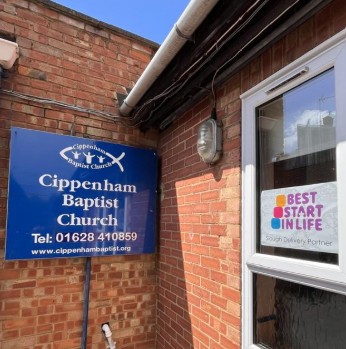
One example is Cippenham Baptist Church, Slough.
Cippenham Baptist Church is a small but committed church community that has been developing Stay and Play, baby groups, and holiday activities to support local families. They have recently been recognised by their local authority as a delivery partner for their ‘Best Start in Life’ offer.
As encouraged in the Family Hubs Toolkit, Cippenham Baptist Church undertook a community survey to ensure that their offer was shaped by the needs and priorities of their local community. The activities that Cippenham Baptist Church has since offered have received consistently positive feedback from local families:
- 99% felt welcomed and valued
- 96% said activities met their family’s needs
- 100% felt more supported since attending
- 100% felt more aware of local services available to them
Cippenham Baptist Church demonstrates how even a small congregation can play a meaningful role in supporting families – by listening well and partnering with their local Family Hub.
To find out more about the Family Hubs Toolkit or have a further conversation about this work please get in touch: [email protected]
The ChurchWorks Commission is made up of senior church leaders from major UK church denominations and umbrella bodies, collectively representing a significant number of the c.40,000 churches across the UK. The Commission seeks to strengthen collaboration between churches and the Government to address urgent social challenges within local communities, with a key strategic emphasis on improving outcomes for vulnerable children and families.